


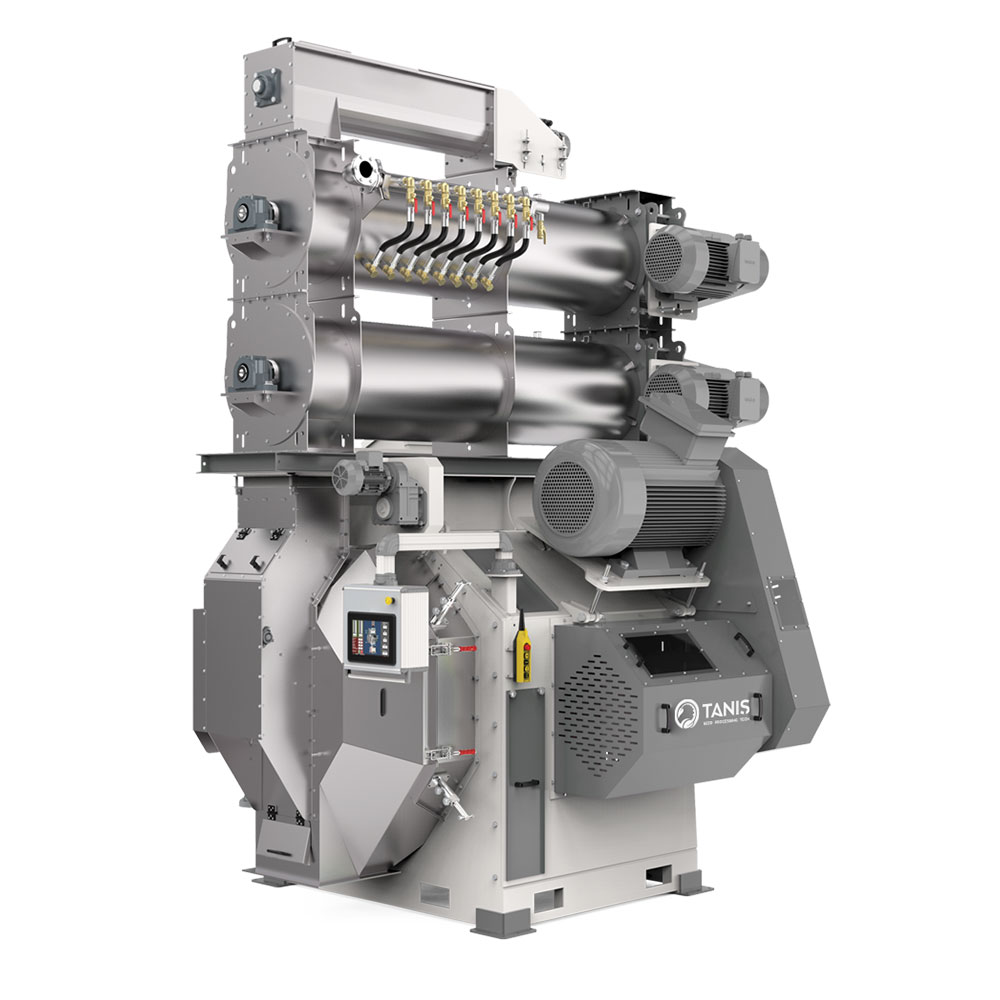

Tanis Pellet Press: High-Quality Standardized Pellet Production
Industrial Solution for Compression and Shaping
In agriculture, feed, fertilizer, and biomass processing, compressing raw materials into standardized pellets is critical for product quality, logistics efficiency, and storage convenience. The Tanis Pellet Press shapes various raw materials under high pressure into homogeneous pellets. Powders, flours, fibrous or granular materials are transformed into compact, durable, and standardized pellets with this system.
Working Principle
The process begins by transferring materials from the feeding screw to the pre-chamber. The product is compressed onto the die surface via a rotating disk or horizontal cylinder. Material passing through the die holes is shaped under the cylinder’s applied pressure. Friction heat hardens the pellets, preserving their form.
-
Die diameter, hole length, and pressure settings are adjustable based on the material and desired results.
-
This allows production of different formulations on a single machine.
Application Areas
-
Poultry, cattle, and fish feed production
-
Organic fertilizer pelletization (manure, compost, peat)
-
Seed additive pellets (nutritional or microbial)
-
Wood and biomass fuel production
-
Agricultural waste recycling (bran, husk, pomace)
Key Features
-
High Compression Power: Shapes various materials under high pressure
-
Energy Efficiency: High production with low consumption
-
Modular Die System: Flexible pellet diameter and length
-
Homogeneous Product Flow: Consistent density and shape
-
Easy Maintenance & Cleaning: Quick die replacement and accessible design
-
Automation Compatibility: PLC/SCADA integration for pressure, temperature, and dosage control
Process Advantages
The pellet press enhances logistics and processing efficiency by producing compact pellets. Homogeneous pellets ensure stable operation in subsequent processes, reducing downtime and malfunctions. Rapid die replacement shortens production transitions, increasing flexibility and improving stock management.
Operational Flexibility
-
Material Versatility: Works with different raw materials
-
Quick Adjustment: Fast die and pressure changes
-
Consistent Quality: Same density and hardness per production cycle
Maintenance & Cleaning
Openable covers and modular components allow quick maintenance. Die and cylinder changes can be performed in minutes, minimizing downtime and supporting continuous production.
Integration & Control
The Tanis Pellet Press is fully compatible with automation systems. Through PLC/SCADA connection, motor speed, pressure, temperature, and dosage can be centrally monitored and controlled, ensuring consistent product characteristics.
Frequently Asked Questions (FAQ)
-
Which materials can be processed?
Feed, fertilizer, biomass, seed additives, organic waste, and fibrous agricultural by-products. -
Can pellet sizes be changed?
Yes. Die replacement allows different diameters and lengths. -
How long does die change take?
Typically 15–30 minutes due to modular design. -
Is automation supported?
Yes. PLC/SCADA enables central control of production parameters. -
Is cleaning easy?
Yes. Wide access panels and modular design make cleaning quick.
Conclusion
The Tanis Pellet Press combines high-pressure shaping and modular design to produce efficient, fast, and standardized pellets from a variety of raw materials. Its durable construction, flexible usage, and easy maintenance make it a reliable solution for production lines, maintaining quality standards and sustainable production capacity.