


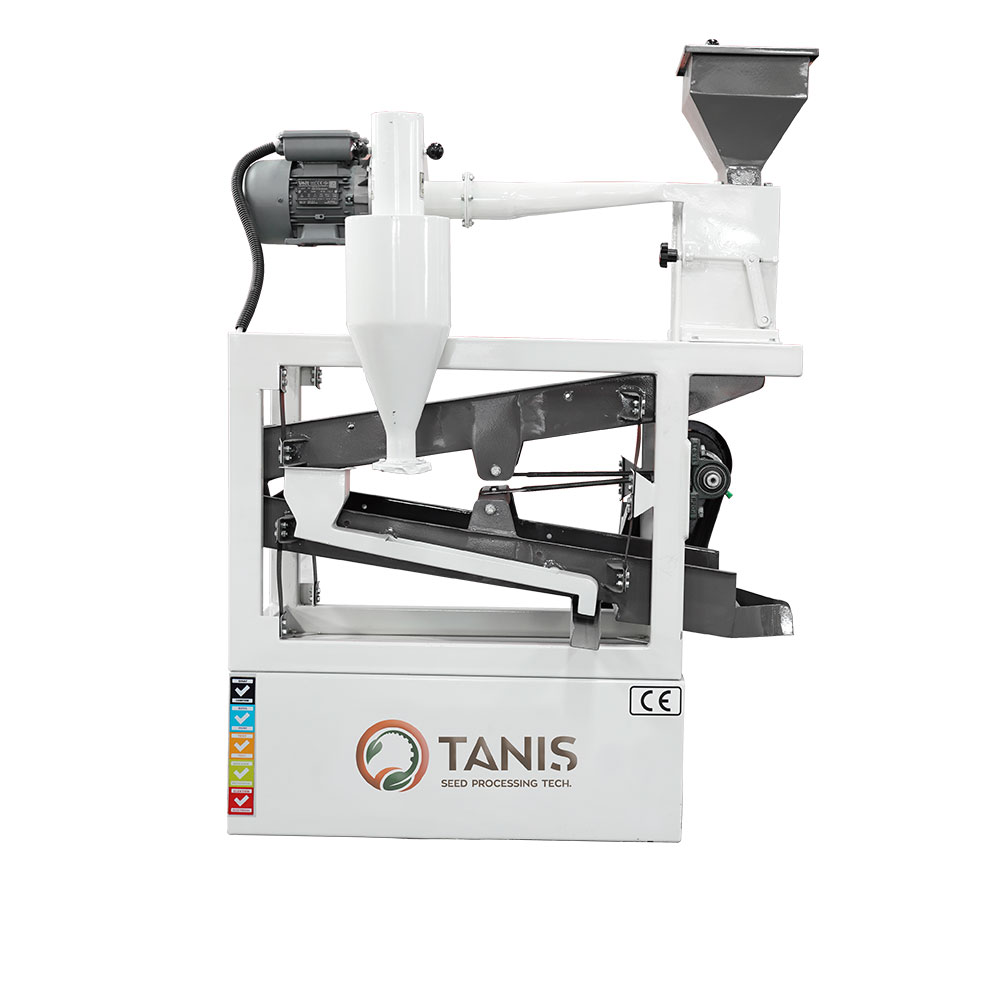

The Scientific Side of Quality Control: Tanis Analysis Sieve
In seed processing and grain cleaning, achieving the highest quality begins with accurate analysis. Determining the physical structure, grain size, and dimensional distribution of products before processing is the most effective way to maintain quality standards. The Tanis Analysis Sieve is a laboratory-type, high-precision quality control device designed for this purpose.
Compact yet powerful, it plays a critical role in the production chain. It is particularly valuable in product acceptance stages, pre-production sample analyses, and seed classification tests. With durable materials, precise measurement capability, and a user-friendly design, it stands as a reliable laboratory companion in agricultural technology.
Operating Principle: Layered Sieve and Vibratory Separation
The Tanis Analysis Sieve operates by stacking layered sieves with different mesh sizes. The sample is placed on the top sieve, and once activated, the table begins a controlled horizontal vibration. This motion spreads the product evenly across the sieve surface:
-
Larger grains remain in the upper layers.
-
Smaller grains and dust pass to the lower layers.
-
Each layer collects a fraction, providing accurate size distribution.
-
The data allows clear determination of product quality classes.
This method establishes a scientific foundation for seed screening and grain classification.
Applications
The Tanis Analysis Sieve provides reliable measurements for a wide range of agricultural products, including:
-
Preliminary quality analysis in seed production
-
Sample acceptance tests for grains and legumes
-
Checking sieve suitability for classification machines
-
Batch-based quality comparisons
-
Product calibration in R&D studies
-
Small-scale laboratory screening tests
Thanks to its modular design, it easily adapts to products such as wheat, barley, lentils, chickpeas, sunflower seeds, and more.
Advantages of the Tanis Analysis Sieve
-
High Precision: Up to 98% accuracy in grain size analysis
-
Modular Sieve System: Easily replaceable stainless-steel sieve sets
-
Quiet & Stable Operation: Low-noise motor ideal for labs
-
User-Friendly: Quick setup and simple interface
-
International Standards: Compatible with universal testing methodologies
-
Durability: Food-grade coating and robust steel body
Frequently Asked Questions (FAQ)
Which products can it analyze?
It can be used for all grains and seeds such as wheat, barley, corn, lentils, chickpeas, beans, and sunflower seeds.
Can sieve openings be changed?
Yes. The modular sieve layers are easily replaceable, with special sets for different products.
Does it have a weighing function?
No. However, fractions can be weighed separately on a precision scale to calculate percentage distribution.
What is the noise level?
The motor is quiet and stable, suitable for laboratory environments.
Does it support automation?
No. It is a manually operated system and does not require PLC/SCADA connection.
Conclusion
The Tanis Analysis Sieve is the ideal solution for agricultural and seed businesses aiming for laboratory-level quality control. From product acceptance to R&D, it delivers reliable data and measurable results. Accurate sieve selection ensures higher efficiency, improved classification, and increased customer satisfaction.