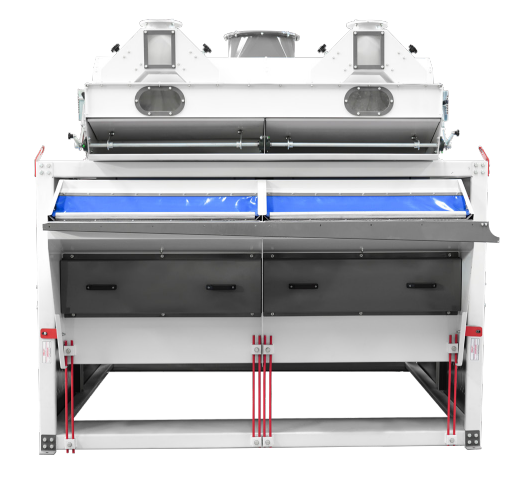
Lentil processing involves a series of integrated steps designed to ensure high-quality, hygienic, and market-ready products. The process begins with pre-cleaning, where a strong airflow removes foreign materials such as dust, stones, and soil particles. Drying reduces moisture content in freshly harvested lentils, preventing spoilage during storage.
Next, cleaning and peeling remove unwanted substances and the outer skins of the lentils. Classification separates lentils by size while removing broken or damaged grains, ensuring a homogeneous product. During crushing or splitting, the outer shell is removed and lentils are split efficiently using grooved stones with adjustable motor speeds. Tarar systems further remove residual dust, feathers, or small particles, improving hygiene and overall product quality.
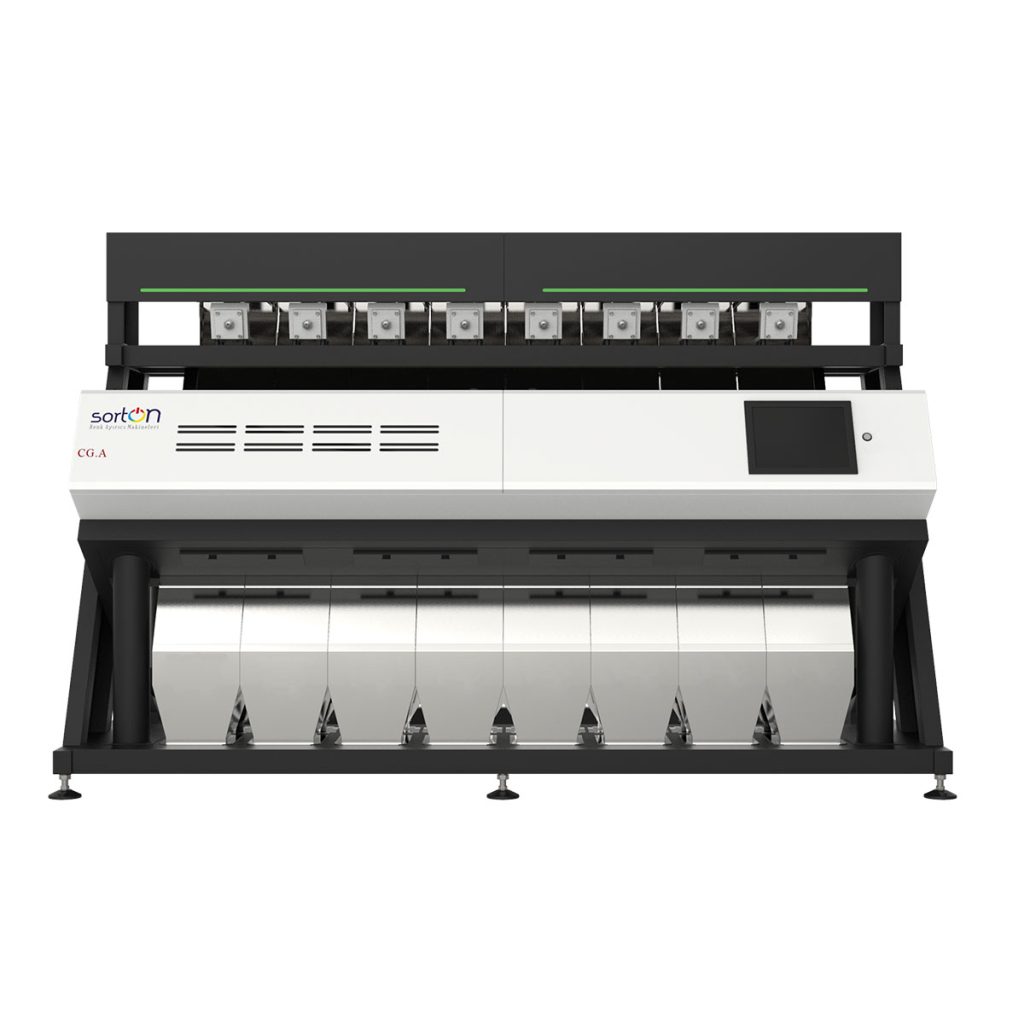
Advanced color sorting technology, such as the Tanis Sorton Zeugma with dual Full HD cameras and AI algorithms, separates lentils based on color, size, or defects with high precision, while air ejectors minimize waste. Polishing adds a finishing touch, enhancing the appearance and texture of lentils using water or oil without causing damage.
Finally, the lentils are packaged in standardized sizes, ready for storage or sale. Each step in the lentil processing line contributes to efficiency, quality, and food safety, making these systems essential for modern lentil production plants.
Pre-Cleaning
Before the lentils enter the aspirator, a strong airflow is created in the opposite direction of the lentil flow, cleaning foreign materials within the lentils.
Drying
Newly harvested lentils are dried to reduce moisture content. The drying machine is necessary to prevent spoilage during the storage process of the lentils
Cleaning
Foreign substances, stones, soil particles, and other unwanted materials inside the lentil grains are separated
Peeling
The outer skins of the lentils are peeled off by a rotating mechanism in the machine. After the skins are removed, the lentils are cleaned.
Classification
It allows the lentils to be separated according to their sizes. Additionally, broken or damaged grains are also separated by this machine.
Crushing/Splitting
The outer shell of the lentils is removed, and using specially processed and grooved stones with high efficiency and adjustable motor speed, the grooved seeds are split in two
Tarar
Small dust, feathers, and residues remaining on the lentils are cleaned. This increases the quality of the product and ensures hygiene.
Color Separation (Color Sorter)
Ensures the separation of lentils according to quality. For example, seeds of small-sized or damaged lentils are separated.
Polishing
The polishing machine polishes the grains and legumes without damage by adding water or oil. With adjustable capacity and polishing rates, it provides smooth polishing, high-quality results, and flexibility
Packaging
Processed lentils are packaged in sizes of 25×50 centimeters. This is necessary for both storage and sales.
In lentil processing plants, various machines used in the process of processing and packaging of lentils and
devices. These machines improve production efficiency, ensure quality and ensure food safety.
for the purpose of lentil processing. These devices are widely used in the lentil processing plant.