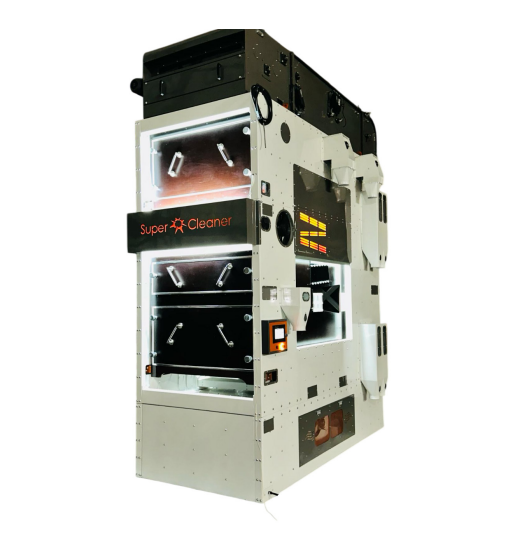
Seed processing is a multi-step operation designed to ensure high-quality, hygienic, and market-ready seeds. The process begins with pre-cleaning, where lentils or other seeds are subjected to a strong airflow that removes impurities such as dust, stones, and plant residues. Cleaning ensures that only healthy, undamaged seeds continue through the production line.
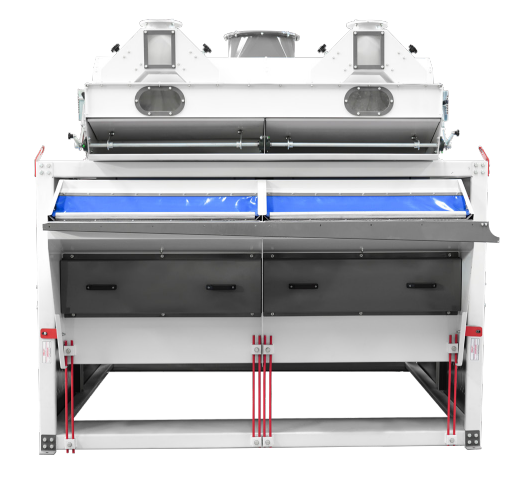
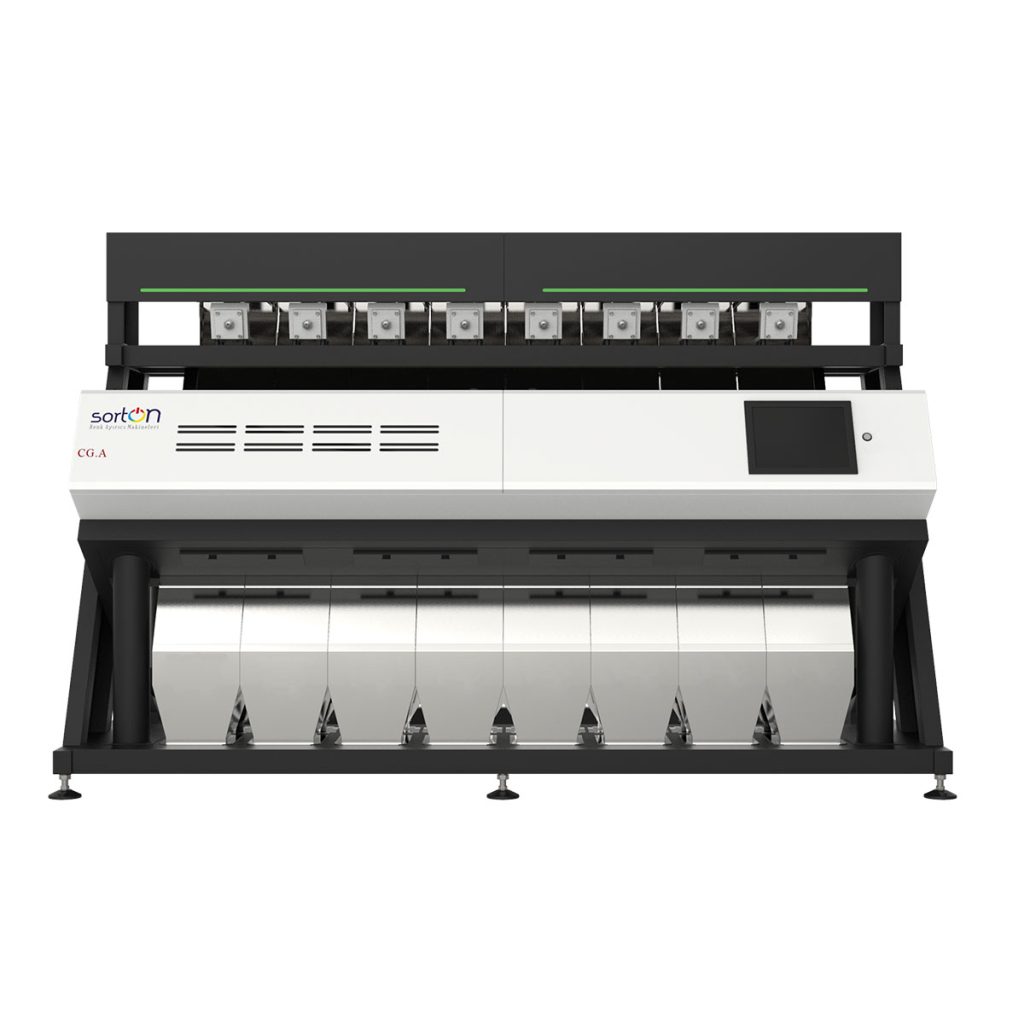
Light grain separation uses fluidized bed principles to classify seeds according to weight and spread, optimizing quality and uniformity. Advanced color sorting systems, like the Tanis Sorton Zeugma equipped with dual Full HD cameras and AI algorithms, identify and remove surface defects with precision while minimizing waste using targeted air ejectors.
Spraying applies protective coatings, fertilizers, or pesticides to seeds as needed. Storage maintains the seeds in controlled humidity and temperature conditions, ensuring long-term preservation. Finally, packaging in standard sizes (e.g., 25×50 kg) prepares the seeds for both storage and sale.
All machines and devices are interconnected to maintain smooth, efficient, and high-quality seed processing. Depending on plant capacity, various configurations and specialized machines can be utilized to achieve optimal results.
Pre-Cleaning
Lentils by aspiration into the casserole
Before entering, the flow of lentils
strong in the opposite direction
by creating a current of airflow, lentils
removes impurities inside.
Cleaning
The seeds need to be protected from foreign bodies (stones,
soil, stems, other plant remains)
to purify the body.
Light Grain
Machine working on the fluidized bed principle,
produced by aspirators below deck
when the air is pushed upwards,
product spilled onto the deck, deck speed, air
flow rate, vertical and horizontal slope of the deck, product
very effective according to its weight and point of spread
provides a product segregation.
Color Sorter
Seeds such as size, weight, shape or color
sorts according to their characteristics. Seeds
between unintended or erroneous
also separates the seeds.
Spraying
Seeds, especially pesticides, fertilizers or with protective coating agents used for coating
Storage
Processed seeds for a long time
storage. Humidity and temperature
control is made and the dryness of the seeds
levels are kept under control
Packaging
finished seeds are packed in 25×50 kilograms. This allows for both storage and sale. is required.
These machines and devices are interconnected to ensure smooth, clean and quality processing of seeds. work in harmony. Depending on the size and processing capacity of the plant, machines with different features can be used.